Work in progress. Last updated 27.09.2008
CAUGHT IN THE ACT:
NEW SOUTH WALES GOVERNMENT ACTS OF BASTARDRY AGAINST ABORIGINAL PEOPLE
1788 - 2006
by Kathy Stavrou
Note: This web page is part of a research blog, and will expand.
Index, time-line, summaries, links, dates and pictures

Index, time-line, summaries, links, and dates
1768-2006
Also indexed: Acts not specifically referring to Aboriginal people but directly
affecting their subject-, citizen- and land ownership rights.
(Under research, Acts 1968-2006, Parliamentary Votes and Proceedings 1931-2006)
Pictures
New South Wales Coat of Arm s

In the Preamble, I shout my opinions from the house-tops, explain why I am doing this research work; provide a small sample of the links to primary source documents, and present my interpretation of New South Wales legal-historical reality. This is not to say that I confine my opinions to the Preamble, and take a dry, measured, theme-based, detached attitude, in the rest of the work, including in this Index page, and the Chapters, following. My tone throughout is designedly agit-prop, tub-thumping, and loudly shouting, and attempts at all times to ram home its message, in memory of Mayakovsky, the revolutionary poet artist hero.
Goongi, John Roberts (Snr.,) Widjabul Tribe Elder, Bundjalung Nation, gave me the clues to the topic of this Research project, and permission to do the research about Widjabul Tribe history: and by giving me information about his culture and history, attempted to let me see life through Aboriginal eyes. Many of the phrases and concepts I use in my work, I am borrowing from him, in particular, the term "bastardisation", which I often heard him say about Government behaviour towards Aboriginal people from the start.
To him also I owe my (limited) understanding of the Widjabul/ Bundjalung term gubbah nyugum" . 'Gubbah' is government, 'nyugum' means, I think, that things are of equal value in a trade situation. 'Nyug' is used now in vernacular to also mean money, so that to say 'gubbah nyugum' is to crack a joke.
Now, if you want to, navigate from here.
Goongi, John Roberts (Snr.)

Widjabul Tribe Elder, Bundjalung Nation
(Photograph used with permission of subject and photographer)
[Source: Michael Weekes Photography]
CHAPTERS 1-13 follow as works in progress
CHAPTER 1
1768-1837
Go to: Chapter 1, Commentary and documents
Go to: Chapter 1, Documents only
" Bloody invasion, Christianity, and the Vagrancy Act (1836)"
Chapter 1 index, links and summary follows
1768-71
·
Captain Cook reports on Aboriginal concepts of value
in his
Journal during his Voyage in M.M. Bark Endeavour
1773
-
Joseph Banks’ Journal, “Terra Nullius”
-
Joseph Banks’ Journal, “No Idea of Traffick”
1787
-
Governor Phillip's instructions, April 25, 1787 “Conciliation of native affections ..." Governor Phillip is instructed to protect the rights of the Aborigines of New South Wales
Captain PHILLIP, A, R.N. Governor.
12/1/1788-10/12/1792
1788 -
-
The Settlement was sited near "an apparently perennial stream of the purest water"
-
Proclamation of Colony. Aboriginal people became British Subjects with the arrival of English Law.
( Mabo judgement, 1992, and the ownership of Crown lands in 1788 )
Aboriginal traditional sacred drug and medicine, 1788
1789 -
-
Exploration of Hawkesbury and Nepean Rivers
-
Phillip proclaimed Captain-General and Governor-in-Chief over New South Wales
1790
-
"The natives, too, were hostile. Phillip did his best to treat them kindly, but few of the settlers followed his example; stragglers from the township were killed by way of revenge, and the bush was set on fire whenever the white men turned their stock into it for pasturage."
1791 -
-
Grants of land to settlers
Replica of Cook's ship, the Endeavour

[Source:www.mindspring.com]
Captain James Cook

Portrait by John Webber in the National Portrait Gallery, London
[Source: Clark, C.M.H., A History of Australia, Vol.1, Melbourne University Press (1962)
Sir Joseph Banks
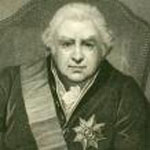
[Source: www.rbgkew.org.
Cook sails past Byron Bay, (1)

"Banks, take a look at those natives on the beach all hiding their faces!"
On the beach at Byron Bay
(2)

"Brothers, quick, hide your eyes! Must be Derangun!"
(Derangun - bad woman spirit, scary, white, faceless, walks at night.)
[1&2, Source of information, John Roberts, Widjabul Elder]
Governor Arthur Phillip

From an engraving in the Mitchell Library
[Source: Greenwood, Gordon, Australia (Angus and Robertson, 1955)
Sydney Cove, August 1788

from Captain Hunter's sketch
[Source: Jose, AW, History of Australasia Sydney, Angus and Robertson, 1813, p.63]
Captain GROSE, F Lieut. (in charge)
11/12/1792-12/12/1794
1792
-
The military administer the Colony.
11/12/1792-12/12/1794
Captain PATERSON, NSW Corps Lieut.-Governor (in charge)
13/12/1794-1/9/1795
1795 -
-
60 men of the New South Wales Corps are sent to the Hawkesbury settlements to combat the Daruk Aborigines.
NSW Corps soldier

[Source: http://www.militarybadges.info]
Captain HUNTER, (RN) Governor
1796 -
-
Exploration of Port Hacking
1797 -
-
Exploration of Tuggerah Lakes
1799 -
-
Exploration of North Coast, Lachlan River
1800
7/9/1795-27/9/1800
Governor Hunter
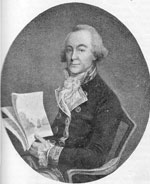
[Source: Jose, A.W., History of Australasia (Angus and Robertson, 1813)]
Sydney from the West in 1800

[Source: Jose, A.W., History of Australasia ( Angus and Robertson, 1813)]
Captain PG KING, (RN) Governor
26/9/1800-12/8/1806
-
Governor King at first strove to keep peace with the Aboriginals, whom he ' considered the real Proprietors of the soil'
1802 -
-
Exploration of continental coastline and Port Phillip Bay
1803 -
-
Settlement at Risdon, Van Diemen's Land
-
The Sydney Gazette, (Published by Authority), begins publication of news items about the Aborigines in the vicinity of the settlement; Governor King's Standing Orders referring to them; and Military sorties against the Tribes and individuals
1804
-
Prodigious quantities of mackerel on the coast, harvested by Aborigines
-
A file of Troopers is sent by the Governor to the Hawkesbury to attack and shoot Aborigines
-
Escaped convicts speared by local Tribesmen
-
Frequent clashes between Tribes and Europeans in Portland Head, Richmond Hill, Georges River, Lane Cove, shooting of two Aborigines at Richmond Hill
-
The Sydney Gazette describes the use of a boomerang
1805 -
-
Macarthur receives grant of 5,000 acres
-
Summary executions of Aborigines by New South Wales Corps at the direction of Governor King
26/9/1800-12/8/1806
"How ironic is that ..." -1805-Governor King tries to give hemp pants to the local Aborigines.

[Source: The Nimbin Good Times March 2006]
Philip Gidley King
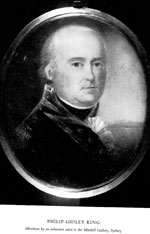
[Source: Clark, C.M.H., A History of Australia, Vol.1, Melbourne University Press (1962)
The Reverend Samuel Marsden, Magistrate

[Source: Clark, C.M.H., A History of Australia, Vol.1, Melbourne University Press (1962)
Captain W Bligh, (RN) Governor
13/8/1806-26/1/1808
13/8/1806-26/1/1808
NSW Corps Acting Administrator (Lieut. Col. FOVEAUX)
26/12/1808-28/12/1809
26/12/1808-28/12/1809
Major-General L MACQUARIE, Governor
1/1/1810-1/12/1821
1812 -
-
Creation of Governor's Court and Supreme Court,
-
Select Committee of House of Commons appointed to inquire into condition of New South Wales
1813 -
-
crossing of Blue Mountains,
-
exploration Bathurst Plains and Macquarie River
1814 -
-
Charter of Justice published,
-
Civil Jurisdiction , Supreme court commenced,
-
exploration of Berrima district,
-
name "Australia" substituted for New Holland
1815 -
-
Road over the Blue Mountains,
-
foundation of Bathurst,
-
exploration of Lachlan River
1817 -
-
Exploration of Lachlan and Macquarie Rivers, Lake George, Bathurst, Goulburn Plains
1818 -
-
Exploration of Peel, Hastings, and Manning Rivers and Liverpool Plains
1820 -
-
Exploration of Clyde River
1821 -
-
Settlement at Port Macquarie
1/1/1810-1/12/1821
Governor Macquarie

[Source: Jose, A.W., History of Australasia ( Angus and Robertson, 1813)]
Sir T BRISBANE, KCB Governor
1/12/1821-1/12/1825
1822 -
-
Governor Brisbane establishes free settlement at Wellington Valley
1823 -
-
First Australian Constitution, Legislative Council of 5 to 7 persons nominated by the Governor,
-
encouragement of free settlement,
-
squatting commenced,
-
exploration of Murrumbidgee River and Monaro Plains
-
Governor Brisbane allows "the shooting of Aboriginals in batches."
-
New South Wales proclaimed a Crown Colony,
-
first land regulations,
-
Currency act (first Act of Parliament),
1824
-
The first Legislative Council meets, New South Wales constitutes a Crown Colony
-
Introduction of Trial by jury: "the privilege of being tried by his peers was extended to every man"
-
Governor Brisbane ordered to make land grants to free settlers, empowered to sell Crown lands under a tender system
-
The Australian Agricultural Company formed, to be granted extensive areas of land at a nominal quit rent and a monopoly of coal-mining in New South Wales in return for an investment of 1,000,000 pounds
1825
-
Governor Ralph Darling was enjoined to see that the natives were "protected in the full enjoyment of their possessions, [and] preserved from violence and injustice, but also to take measures for "their conversion to the Christian faith and their advancement in civilisation." [Elkin]
-
The formation of a force of Military mounted police"
-
Extension of New South Wales Westward
-
Governors were financially independent because they controlled the money raised from the sale of Crown land.
1/12/1821-1/12/1825
Colonel STEWART (3rd Regiment) Acting Governor
6/12/1825-18/12/25
6/12/1825-18/12/25
Lieutenant-General R DARLING, Governor
19/12/1825-21/10/1831
1825
-
Governor Darling ordered by Colonial office to permit grants of between 320 and 2,560 acres to private buyers, and expressly permitted the sale of Crown land in lots up to 4,000 acres
1826 -
-
Illawarra settlement established,
-
The Black War in Tasmania.
1827 -
-
land speculation, exploration of Gwydir, Dumaresque and Condamine Rivers and Darling Downs,
-
case of R v Lowe determined that Aboriginal people were subject to its jurisdiction when they were in conflict with Europeans
1828 -
-
Second Constitution; Legislative Council enlarged to 15 members, first census of Europeans, 36,598;
-
Imperial Act, all laws and statutes in force in England in 1828 apply in New South Wales;
-
exploration of the Richmond River by Captain Henry Rous
-
declaration of martial law in Tasmania, Whites were authorized to kill Blacks on sight
1829 -
-
exploration of the Darling River,
-
case of R v Ballard, "Aborigines are entitled to their own laws" Judge Dowling rules that Aborigines have not consented to their acceptance of British law
-
Government resumption of Crown and Church Lands
1830 -
-
exploration of the Murrumbidgee River,
-
the population of 5,000 Aborigines in Tasmania reduced to 75
19/12/1825-21/10/1831
Sydney and Tasmanian Aborigines


(Source: front and back covers of Woolmington J., Aborigines in Colonial Society, Cassell Australia 1973): 1830's,
An Aboriginal camp near Port Stephens, NSW, 1830's?

[Source: Driscoll, W.P. and Elphick, E.S.; Birth of a Nation (Rigby 1974)
Colonel LINDSAY, CB Acting Governor
22/10/1831-2/12/1831
22/10/1831-2/12/1831
WHIG
Major-General Sir Richard BOURKE, KCB Governor
3/12/1831-5/12/1837
1833
-
The Wellington Missionaries report on the violence of the settlers towards the Aborigines .
-
Appellate jurisdiction of Privy Council extended to Colony; civilian juries in criminal cases (not for Aborigines.)
1834 -
-
Settlement at Twofold Bay, borrowed capital floods into the Colony
1834
-
"Graziers who had well established freehold stations found it abundantly worth while to send flocks out far beyond their accustomed pastures, to graze on good free land"
-
"The duty of acting upon principles of justice and humanity"
-
Report of the Mission to the Aborigines of New Holland.
-
"Recognising customary law"
1835 -
-
exploration and settlement of Port Phillip area
-
The Missionaries report to the Legislative Council and Assembly about the condition of the Aborigines
-
In 1835, John Batman signed two 'treaties' with Kulin people to 'purchase' 600,000 acres of land between what is now Melbourne and the Bellarine Peninsula. In response to these treaties and other arrangements between free settlers and Indigenous inhabitants, such as around Camden, the NSW Governor, Sir Richard Bourke issued a proclamation. Bourke's proclamation established the notion that the land belonged to no-one prior to the British crown taking possession.
1836 -
-
squatting formally recognised,
-
Wellington Missionaries report on Aboriginal deaths by execution and measles,
-
case of R v Murrell, English law gave equal protection to Aboriginal people as Europeans
An Act for the Prevention of Vagrancy and for the punishment of Idle and Disorderly Rogues and Vagabonds and incorrigible Rogues in the Colony of New South Wales (6 Geo. IV. No.6) 25 August 1836
3/12/1831-5/12/1837
Sir Richard Bourke

From a contemporary print in the Mitchell library
[Source: Greenwood, Gordon, Australia (Angus and Robertson, 1955)
John Batman's 'treaty' agreeing that he had purchased 600,000 acres from 8 Tribal chiefs, in return for some blankets, beads, flour, tomahawks, clothes, scissors, looking glasses, and knives.
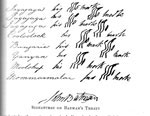
[Source: Jose, AW, History of Australasia Sydney, Angus and Robertson, 1813, p.63]
Lieutenant-Col. K SNODGRASS, Acting Governor
12/7/1837-23/2/1838
1837 -
-
Ordinance, (forcibly detaining Aboriginal women)
Colonial Secretary's Office, Sydney, 18th September, 1837. Sydney Gazette -
Queen Victoria's reign begins
12/7/1837-23/2/1838
1838 - 1847
"Queen Victoria Proclaims Aboriginal Rights, and the Evidence Act is Disallowed"
Chapter 2 index, links and summary follows.
Sir George GIPPS,
Governor
WHIG
24/2/1838-11/7/1846
1838
Supplying Liquors to
Aboriginal Natives (1838), An Act for Consolidating and amending the Laws relating to
the Licensing of Public-houses, and for further regulating the Sale and
Consumption of Fermented and Spirituous Liquors in New South Wales, 2
Victoria, No. 18, sec. 49. [26th Sept 1838.]
-
Major Nunn and troopers murder unknown number of Aborigines,
-
Governor Gipps announces that an Inquest shall be held on Aborigines killed by white men,
-
Mounted police established,
-
Gipps refers to massacres of aborigines,
-
Lord Glenelg stresses protection of Aborigines,
-
Robinson appointed Chief Protector of Aborigines,
-
execution of the 7 Myall Creek murderers,
-
The Aborigines Protection Society founded in England,
Report from the Select Committee on the Present State of the Aborigines,1838
1839
Colonial Secretary's Office, Sydney (Reissued). Sydney Gazette.
His Excellency has been pleased to report the names of all Persons
(forcibly detaining Aboriginal women), "in order that their Licenses
may be immediately cancelled, and that they may be prosecuted under
the Act, as illegal occupiers of Crown Lands, or otherwise, as the
Law directs. By His Excellency's Command"
1839 -
-
Queen Victoria's reign commenced in 1837, so that the Aboriginal subject rights document following must have been one of the first Acts of her reign, denoting its importance.
Queen Victoria's Ordinance on the rights of Aborigines as subjects; 2 Vic. 27 1839
"where there is a violent death in consequence of a collision with white men, an Inquest or Inquiry is to be held in the same way as if the Deceased had been of European origin",
-
This document is discreetly located, over 2 pages, in tiny print, in amidst the pages of the Crown Lands Unauthorized Occupation Act, 2 Vict 27 1839.
Standing Orders to the Border Police, 1839
Crown
Lands Unauthorised Occupation Act, 2 Vict 27
(1839);
-
Her Majesty asserts her right to Alienate the Waste Lands of New South Wales,
-
Attorney-General's legal opinion of the killing of Aborigines by Major Nunn,
-
Evidence of Native Witnesses is excluded from the Courts,
-
Governor LaTrobe given strict instructions re protection of Aborigines,
1840 -
-
Chief Protector of Aborigines talks about rights of Aborigines to land
-
Royal Instructions on the natural indefeasible property rights of aborigines;
-
a surveying party, a Commissioner of Crown Lands, and Border Police sent to the Clarence River
1842
-
New South Wales Constitution Act, 1842
"And be it enacted that out of the said revenue fund there shall be payable every year to Her Majesty her heirs and successors the sum of thirty three thousand pounds for defraying the expenses of the several services and purposes in the schedule marked (A) annexed to this act and a further sum of eighteen thousand six hundred pounds for defraying the expenses of the several services and purposes named in the schedule marked (B) annexed to this act and a further sum of thirty thousand pounds for defraying the expenses of the several services and purposes named in the schedule marked (C) annexed to this act the said sums of thirty three thousand pounds eighteen thousand six hundred pounds and thirty thousand pounds to be issued by the Treasurer of the said Colony in discharge of such warrant or warrants as shall be from time to time directed to him under the hand and seal of the Governor"
Crown Land Sales Act 1842
-
"The Land Act of 1842 saw the creation of reserves on Crown Land for the use of the Aboriginal people." This move by the Government aimed to give Aboriginal people continuing 'secure' occupation of land.
-
Cedar-getters camp at East Ballina (Bundjalung Nation Tribal territory)
-
Moreton Bay proclaimed open to settlement and first sale of Moreton Bay land held in Sydney
1843 -
-
First Representative Constitution Act 12 Crown nominees and 24 elected members of Legislative Council
1843 -
-
first general election -
-
Representative Assembly,
-
Gipps to discontinue grants to the missions
1845 -
-
Sir Thomas Mitchell reaches Fitzroy Downs, Culgoa, Warrego and Barcoo Rivers
24/2/1838-11/7/1846
Queen Victoria

Governor George Gipps

[Source: Jose, A.W.; History of Australasia (Angus and Robertson, 1913)
Votes and Proceedings, 18 March 1839; Crown Lands Occupation Act Amendment Bill

Queen Victoria's Ordinance on the rights of Aborigines as subjects; 2 Vic. 27 1839
(link to transcript)

[Source: Acts and Ordinances of NSW (ed. Callaghan) (1844-1852) 3v. in 4 46. Imperial Statutes in Force (ed. Bignold) [1913] 46. New South Wales Legislation in Force]
Alphabetical Index to the Subjects of Public General Acts of the Legislature of New South Wales, from 5 Geo. IV to 38 Vic., inclusive
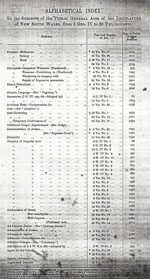
"Aboriginals - Competent Witnesses (Disallowed). Firearms - Prohibiting to (Disallowed). Wandering in Company with. Supply of Liquor to prevention."
Major Mitchell
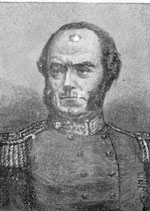
[Source: Jose, A.W.; History of Australasia (Angus and Robertson, 1913)
Sir Maurice O'CONNELL, Acting Governor
12/7/1846-2/8/1846
12/7/1846-2/8/1846
1846-1857
"The Squatters use the New South Wales Native Police to expand their Territories."
Chapter 3 index, links and summary follows.
Sir Charles A FITZROY, Governor
3/8/1846-17/1/1855
Imperial Act 1846 -
-
gave 14 years' lease to squatters in unsettled districts; Wentworth and squatters won most of their demands in the imperial Act, which gave them security ... they could purchase key-points on their runs, such as around the waterholes
1846 -
-
non-Aboriginal population, census, 154,205
1847 -
-
The Rev. Dr. Lang and GA Robinson, chief protector of Aboriginals state that poisoning by settlers was undoubtedly one cause in the decrease of the aboriginals
Crown Land Leases Act 1847
-
Earl Grey and the Colonial Office surrendered to the squatters, and by the Orders-In-Council of 1847, the license holders obtained the coveted right to leases for fourteen years of all runs in outlying districts
1848 -
-
Further North-Western explorations (NSW)
1849 -
-
another attempt was made to introduce a Bill to allow the Aboriginal Natives of New South Wales to be received as competent witnesses. Again it was defeated on the grounds that Aborigines "had no knowledge of truth or falsehood and were incapable of entertaining one scintilla of anything like religion"
Australian
Colonies Act (1850)
Vagrancy Act (1851)
An Act for the more effectual prevention of Vagrancy and for the punishment of idle and disorderly Persons Rogues and vagabonds and incorrigible Rogues in the Colony of NSW [1st December, 1851] (Illegal to wander with Aborigines)
1851 -
-
Colony of Victoria (Port Phillip District) separated from New South Wales
1852 -
-
An Act to Amend the Law of Evidence continues to exclude Aboriginal people from giving evidence in Court
1853 -
"on behalf of Her Majesty with respect to any lands situate within the said Colony in cases where such contracts promises or engagements shall have been lawfully made before the time at which this Act shall take effect within this Colony nor to disturb or in any way interfere with or prejudice any vested or other rights which have accrued or belong to the licensed occupants or lessees of any Crown Lands within or without the Settled Districts"
"The qualifications for Electors of the Legislative Assembly shall be as follows—Every man of the age of twenty-one years being a natural born or naturalized subject of Her Majesty or legally made a denizen of New South Wales and having a freehold estate in possession situate within the district for which his vote is to be given of the clear value of one hundred pounds sterling money ..."
-
The Act establishes the profitable ownership by the Queen of all the Crown lands in the colony, extinguishes Aboriginal title while affirming squatters' title; establishes 2 Chambers, the Legislative Council and the Legislative Assembly, (dominated by squatters and land profiteers). (S.1) excludes Aborigines from franchise by property, rental or lease qualification, (S.13) describes the Electoral Districts which are actually the Tribal territories of still living Tribes, (S.15) refers to "Christian" names and the published Electoral Rolls, (S.16) makes it legal for the Legislature to regulate the buying and selling of land, referred to as "Waste" lands (S.50) &c.
-
Wentworth, in Parliament, denies the policy of Government interference in violence towards the aborigines by settlers.
1854 -
-
A further Act to Amend the Law of Evidence continues to exclude Aboriginal people from giving evidence in Court
3/8/1846-17/1/1855
WC Wentworth

[Source: Hartley Grattan, C; Australia, University of California Press (1947)]
Tracks of the European explorers,
South Eastern Australia, to 1846

[Source: Jose, A.W.; History of Australasia (Angus and Robertson, 1913)
Oliver Fry, Crown Lands Commissioner, Clarence River, about 1850

[Source: O'Sullivan J, Mounted police in N.S.W., Rigby (1973)
Military police, armed with guns and swords, attacking Aborigines, about 1850

[Source: O'Sullivan J, Mounted police in N.S.W., Rigby (1973)
Sir William Thomas DENISON, KCB, Governor
20/1/1855-22/1/1861
1855 -
-
New Constitution inaugurated;
-
Responsible government, reflecting the power of non-Aboriginal landholders, and excluding Aborigines
20/1/1855-22/1/1861
Stuart Alexander DONALDSON, Colonial Secretary (also referred to as Prime Minister)
6/6/1856-25/8/1856
1856 -
-
First elective Parliament and responsible Ministry
-
civil registration of births, deaths and marriages for non-Aborigines
-
Census, non-Aborigines - 252,649
-
Production of all correspondence about the Native Police is called for in Parliament
-
projected separation of the Northern districts of the Colony of New South Wales and their erection into a distinct colony, thereby cutting through the Northern district Aboriginal (Bundjalung) Tribal territory
6/6/1856-25/8/1856
Charles (later Sir Charles) COWPER, Colonial Secretary (also referred to as Prime Minister)
26/8/1856-2/10/1856
26/8/1856-2/10/1856
Henry W PARKER; Colonial Secretary (also referred to as Prime Minister)
3/8/1856-7/9/1857
1856 -
-
The establishment of a Select Committee on the operation of the Native Police moved and accepted
1857 -
-
Electoral lists and rolls printed, Aborigines are excluded
-
Massacres of Aborigines at Woodlark Island; 5/1/57
-
Claims by Northern Settlers for Provisions for Native Police; m. 4/2/57
-
Report on Native Police; tabled. Pap. 29/1/57
-
Native Police Force; m. 7/2/57; tab. Pap. 7/2/57
Native
Police Force, Select Committee Report and Recommendations; 7/2/57
-
Native Police Force; 11/2/57
-
Massacre at Woodlark Island: request to GG for correspondence: m. 11/2/57
-
Native Police, request from Governor- General for new estimate; 18/2/57
-
Killing of Blacks by Native Troopers; tab. pap. 28/2/57;
-
Blankets for Aboriginals; q. 27/3/57
3/8/1856-7/9/1857
1857- 1875
"The Crown Lands Alienation Bill (1861) 'makes no provision for aborigines'."
Chapter 4 index, links and summary follows.
Charles (later Sir Charles) COWPER, Colonial Secretary (also referred to as Prime Minister)
7/9/1857- 26/10/1859
1857 - (Parliamentary Votes and proceedings)
-
Killing of Blacks by Native Troopers tab. pap. 21/10/57
-
Woodlark Island Massacres, minutes of evidence, and Appendix
-
Murders, Dawson River
-
Letter, Brisbane, murders by Native Police
-
Native Police Expense, Bathurst
-
Murder of Aborigines
-
Murders by Aborigines
-
Native Police
-
Woodlark Island Massacres
-
Sentences on Aborigines
-
Aborigines Right to Vote
1858
An Act for the further amendment of the Law of Evidence (1858)
-
Aborigines still not allowed to give evidence, either sworn or unsworn, in Court
Electoral Reform Act (1858)
-
Manhood suffrage and vote by ballot, for non-Aborigines
7/9/1857- 26/10/1859
William FORSTER; Colonial Secretary (also referred to as Prime Minister)
27/10/1859-8/3/1860
1859 -
-
Moreton Bay (Queensland) proclaimed a separate colony
-
exploration of Darling River
-
opinion of the ATTORNEY-GENERAL; that aboriginal natives not qualified to give evidence in a court of justice, were not entitled to have their names inserted in any Electoral List, and to vote for members of Parliament
-
Member of Parliament says that if it turns out that if under the present electoral Act Aborigines were not disqualified, it would make it necessary to bring in a short Act to disqualify them
27/10/1859-8/3/1860
Sir John ROBERTSON; Secretary for Lands (also referred to as Prime Minister)
9/3/1860-9/1/1961
1861 -
Crown Lands Alienation Bill, Parliamentary debate, 1861
-
A member of Parliament complains that under the Crown Lands Alienation Bill ("Robertson's Land Act") that no provision is made for aborigines
An Act for regulating the Alienation of Crown Lands, 1861
-
Sir John Robertson's Land Act - free selection before survey
-
Vagrants jailed with hard labour for camping with aborigines
-
Member of Parliament says that the blankets for aborigines are often distributed too late in the season, and are sometimes seen on the beds of magistrates and constables.
-
Reserves were set apart by the Governor in Council by notice in the Gazette under State authority derived from S 5 of the Crown Lands (Alienation) Act 1861: no reference made to Aboriginal people. In S 5, such reservation was effected under the power to reserve lands "for any other public purpose". Temporary reservations could be revoked by notice in the Gazette.
9/3/1860-9/1/1961
Charles (later Sir Charles) COWPER, Colonial Secretary (also referred to as Prime Minister)
10/1/1861-15/10/63
1862 -
Sale of Liquors Licensing Act (1862)
Real Property Act (1862) (Torrens Title)
-
Free selection before survey comes into operation
-
By 1862 and the establishment of "free selection" on the Clarence and at Moreton Bay, only 25% of the Aboriginal population of the Bundjalung Tribe alive in 1828, when Rous arrived in the Northern Region, still survive
10/1/1861-15/10/63
James (later Sir James) MARTIN, Attorney-General (also referred to as Prime Minister)
16/10/1863-2/2/1865
16/10/1863-2/2/1865
Charles (later Sir Charles) COWPER, Colonial Secretary (also referred to as Prime Minister)
3/2/1865-21/1/1865
3/2/1865-21/1/1865
Richmond River (Bundjalung Nation) Tribe members, 1865

[Source: Oakes, M.J., The Aborigines of the Richmond Area (Richmond River Historical Society, Pamphlet No. 2]
James (later Sir James) MARTIN, Attorney-General (also referred to as Prime Minister)
22/1/1866-26/10/1868
1866 -
-
Aborigines and Alcohol; petition to Parliament 22/2/66
-
petition from the moderator and clerk of the General Assembly of the Presbyterian Church of New South Wales, praying that the law might be so amended as to prevent any sale or supply of intoxication liquors to the aborigines.
-
A petition, from the moderator of the Presbyterian Synod, praying for the re-imposition of the prohibition upon the supply of intoxicating drinks to the aborigines
Supply of Liquors to Aborigines Prevention Act (1867)
22/1/1866-26/10/1868
John (later Sir John) ROBERTSON, Premier
27/8/1868-12/1/1870
27/8/1868-12/1/1870
Sir Charles COWPER, Colonial Secretary (also referred to as Prime Minister)
13/1/1870-15/12/1870
13/1/1870-15/12/1870
Sir James Martin, Attorney General (also referred to as Prime Minister)
16/12/1870-135/1872
1871 -
-
Forest Reserves established
-
Non-Aboriginal census - 503,981
16/12/1870-135/1872
Henry Parkes, Colonial Secretary (also referred to as Prime Minister)
14/5/1872-8/2/1875
1874
-
Daniel Matthews established the Maloga (later the Cummeragunja) private mission near Moama
14/5/1872-8/2/1875
Sir Henry Parkes

[Source: Hartley Grattan, C; Australia, University of California Press (1947)]
1875 - 1899
"Evidence Further Amendment Act: 'declarations in lieu of oaths permitted.'"
Chapter 5 index, links and summary follows.
John ROBERTSON, Colonial Secretary (also known as Prime Minister)
09/2/1875 - 21/03/1877
Evidence Further Amendment Act (1876) (40 Vic. No. 8)
-
Section 3 - Aborigines of New South Wales attain the right to give unsworn evidence in courts of law, declarations in lieu of oaths permitted
1876 -
-
Select Committee on condition of the aborigines. (19.12. 1876)
-
On May 7, 1876, Truganini, the last full-blood Black person in Tasmania, died at seventy-three years of age. ...
-
"But now the blacks have disappeared, great numbers of native dogs have been poisoned, and water has been artificially conserved for the sustenance of livestock,- all of which has proved as conducive to the increase of wild animals as to the multiplication of sheep and cattle"
09/2/1875 - 21/03/1877
Henry PARKES Colonial Secretary (also referred to as Prime Minister)
1877-
-
Royal Commission appointed 'to inquire into the present condition of the aborigines of the colony, and advise as to the best means of caring for and dealing with them in the future'
22/3/1877-16/8/1877
Sir John ROBERTSON, Colonial Secretary (also known as Prime Minister)
17/8/1877-17/12/1877
James Squire FARNELL; Secretary for Lands (also known as Prime Minister)
18/12/1877-20/12/1878
Sir
Henry PARKES, Colonial Secretary (also known as Prime Minister)
Licensing Act (1882)
21/12/.78 - 29/12/81
Sir John ROBERTSON, Colonial Secretary (also known as Prime Minister)
29/12/1881-19/8/1882
1880-
-
Aboriginal Progressive Association formed another mission near Darlington Point
-
Appointment of protectors of the blacks .. "protection of the aboriginal natives from oppression and outrage on the part of Her Majesty's demoralised white subjects in New South Wales"
-
"The whole matter of the protection of the aborigines of the colony was under the consideration of the Government."
-
Parliamentary proceedings refers to 'outrages inflicted in consequence of the aboriginal women being subjected to the lust of the white man.
-
Sir John Robertson says, 'Let him go to Rose Bay and there he would see young (Aboriginal) children—of course in the guardianship of their parents— and any man might have them for a shilling.'
-
Mr Ogylvie (owned Baryulgil, Grafton) said 'Neither the colonists nor the Government could be charged with having illtreated them, though the Government perhaps had not done as much as it might have done in their behalf'
-
Mr. FOSTER thought the state of the aboriginal inhabitants of the colony was a blot on the British name. We came here as British subjects and took up the country in millions of acres appropriating it to our own use, and the smallness of the amount we had contributed to the welfare of those we dispossessed was disgraceful
29/12/1881-19/8/1882
Sir Henry PARKES, Colonial Secretary, also Secretary for Lands (also known as Prime Minister)
19/8/1882-4/1/1883
1882 -
Licensing Act 1882 (45 Vic. No. 14) [Repealed by Act 18, 1898]
-
supply of spirituous liquors to aboriginal natives of any age forbidden
-
George Thornton, Protector of Aborigines, carries out a census of Aboriginal population
-
Premier and Colonial Secretary recommend the appointment of a Board for the Protection of Aborigines.
-
Questions in Parliament about starvation among Aborigines and abuse by white settlers provoke the first Government expenditure upon the Aboriginal Protection Board
-
Maloga and Warangesda Stations. "The Association for the Protection of the Aborigines had taken into its care the conduct of these two stations"
-
Select Committee "Inquiry into working of aboriginal mission stations at Warangesda and Maloga" (23.6.1882) (8.8.1882),
19/8/1882-4/1/1883
Aborigines in Police custody, chained

Sir Alexander STUART, Colonial Secretary (also known as Prime Minister)
5/1/1883-6/10/1885
1883 -
-
Parliamentary proceedings, Brewarrina Aboriginal Mission,
-
Aborigines removed to America,
-
Protectorate of Aborigines [21 Feb 1883]
-
Legislative Assembly; Ministerial Statement, Treatment of Aborigines [4 Jan 1883]
-
Legislative Assembly; 21 February 1883
-
1884 -
-
Land legislation restricting sales by auction - Land Act giving fixity of tenure to pastoral lessees
-
Mr O'Connor says in Parliament 'The aborigines were the true natives of the colony, but by our audacity and by the spirit of adventure of our race had supplanted them. We had taken lands from them, and we were bound to attend to the wants of those who were left. It was a dishonor to the country that a vote for the sustenance of the aborigines should be granted conditionally on the public subscribing an amount equal to half of that which was voted by Parliament.'
-
Mr White says, 'A great many of them are without food and blankets
-
The Honorable George Thornton was appointed Protector of the Aborigines ; but as the work opened up it was found desirable to intrust to a board the duties of the protector. That board consisted of six members, of which the Honorable George Thornton was elected the first chairman.
-
Sir John Robertson, is the patron of the Society for the Protection of the Aborigines
1885 -
-
Territorial division of the colony, taking no account of Aboriginal Tribal boundaries,
-
Local Land Boards established
5/1/1883-6/10/1885
George Richard DIBBS; Colonial Secretary (also known as Prime Minister)
7/10/1885-9/10/1885
7/10/1885-9/10/1885
Sir John ROBERTSON, Colonial Secretary (also known as Prime Minister)
22/12/1885-22/2/1886
22/12/1885-22/2/1886
Sir Patrick Alfred JENNINGS; Colonial Treasurer (also known as Prime Minister)
26/2/1886-19/1/1887
26/2/1886-19/1/1887
Sir Henry PARKES, Colonial Secretary, also Secretary for Lands (also known as Prime Minister)
25/1/1887-16/1/1889
1888 -
-
Centenary celebration of settlement in Australia
25/1/1887-16/1/1889
George Richard DIBBS; Colonial Secretary (also known as Prime Minister)
17/1/1889-7/3/1889
17/1/1889-7/3/1889
Sir Henry PARKES, Colonial Secretary and Registrar of Records (also known as Prime Minister)
8/3/1889-22/10/1891
8/3/1889-22/10/1891
Sir George Richard DIBBS; Colonial Secretary and Registrar of Records (also known as Prime Minister)
23/10/1891-2/8/1894
23/10/1891-2/8/1894
FREETRADE:
George Houston REID, Colonial Treasurer and Collector of Internal
Revenue (also known as Prime Minister)
3/8/1894
- 13/09/1899
1897
Native Flora Protection Bill, Votes and Proceedings, debate
1898
Coloured Races Restriction and Regulation
Act (1898)
"An
Act to apply and extend certain provisions of the Chinese Restriction
and Regulation Act of 1888 to other Coloured Races, to repeal section
15 of that Act, and for other purposes incidental to or consequent on
the before-mentioned objects. [Reserved, 23rd November, 1896.] (This
Act will be printed when it receives the Royal Assent.)"
Liquor Act (1898)
Australasian Federation Enabling Act Referendum,1898
-
The Evidence Act (1898) repeals Section 1. of the Evidence Further Amendment Act (1876) which enabled Aborigines to give unsworn evidence in Court. (Note: link provides list of Evidence Acts previous to 1898 )
3/8/1894
- 13/09/1899
1899 - 1904
"Aborigines specifically excluded from the Welfare State"
Chapter 6 index, links and summary follows.
PROTECTIONIST:
William John LYNE, Colonial Treasurer and Collector of Internal
Revenue (also known as Prime Minister)
14/9/1899 - 27/3/1901
Real Property Act
(1900)
1900 -
-
Old-age pensions instituted - Section 51 (d) specifically excludes Aborigines
14/9/1899
- 27/3/1901
NON-LABOR PROGRESSIVE:
John SEE, Premier
28.03.01
- 14.06.04
1901
An Act to consolidate the Acts for the prevention of Vagrancy. [4th October, 1901.]
-
" 3. In this Act unless the context or subject-matter otherwise
Commonwealth Posts and Telegraph Act of 1901
-
Section 16: no contract or arrangement for the carriage of mails was to be entered into on behalf of the Commonwealth unless it contained a condition that only white labour was employed in such carriage. Under Section 4 of the Commonwealth Franchise Act of 1901 no aboriginal native of Australia .... was entitled to have his name placed on the electoral roll unless so entitled by Section 41 of the Constitution which conferred the Commonwealth franchise on all entitled to be enrolled in their State.
1902
An Act to consolidate the Acts for the prevention of Vagrancy. [4th October, 1902.]"
-
In this Act unless the context or subject-matter otherwise
-
This made Act Fish traps illegal, and says that "... underweight and undersize fish, shall be forfeited and be disposed of in accordance with the regulations ...The provisions of this section shall not apply to any aboriginal taking or being in possession of fish for his own consumption".
Constitution Act 1902 (N.S.W.)
-
This Act means that "the legislature of New South Wales has power to make laws for the peace, welfare and good government of New South Wales in all cases whatsoever"
-
Mr Norton makes an appeal on behalf of the wretched, maltreated aboriginals on Brungle Station, ... in order that the deplorable condition in which these aborigines are, may be remedied. The Premier, himself, was present, and Mr. Norton asked him to take note of this matter. "The aborigines on Brungle Station are being grossly mistreated and badly fed ..."
-
Aboriginal rations from the Aborigines Protection Board: "A full ration of 8lb flour, 2 lb sugar, and ½ pound tea to each adult. and a half ration to each child ..."
-
Women in New South Wales are granted the right to vote (excluding Aboriginal women)
1903
Legislative Council Votes and Proceedings; debate, Aborigines.
-
"The right of aborigines to travel free on trams was never recognised. It has been restricted lately, however, in consequence of numbers of aborigines coming to La Perouse from country stations, their constant visits to the city leading to disorder and intemperance."
Native Animals Protection Bill 1903 Legislative Council Votes and Proceedings; debate.
-
Mr JCL Fitzpatrick asked the Secretary for Mines and Agriculture-"(1) in view of the wholesale and ruthless destruction of marsupials and other animals indigenous to this country at present being carried on. will he introduce legislation of a character calculated to protect such animals during certain seasons? (2) What was the value of kangaroo, wallaby and opossum skins put upon the market last year?"
-
"The Hon. HC Dangar is surprised to any member of the kangaroo tribe included in the schedule. The sooner they were all exterminated the better it would be. They were hideous, useless brutes. .. We had passed measures offering the pastoralists a premium for the destruction of these pests, and here we were passing a bill to protect them."
1904
Infant Protection Act, 1904
28.03.01 - 14.06.04
Photographs of Aborigines in irons showing the common practice of chaining Aborigines in Police custody.

1904 - 1922
"Three so-called Aborigines Protection Acts, and exclusion from voting."
Chapter 7 index, links and summary follows.
LIBERAL-REFORM:
Joseph Hector CARRUTHERS, Premier
30.08.1904 - 01.10.1907
1905
Liquor (Amendment) Act 1905
-
"(4) For the purposes of this section, the expression "aboriginal native of Australia," means any full blooded aboriginal native of Australia, and any person apparently having an admixture of aboriginal blood who—
Neglected Children and Juvenile Offenders Act 1905
-
The Act enables the Government to extend its control over Aboriginal children
30.08.1904-01.10.1907
LIBERAL:
Charles Gregory WADE, Premier
02.10.07
- 20.10.09
1909
Aborigines Protection Act 1909 "An Act to provide for the protection and care of aborigines; to repeal the Supply of Liquors Aborigines Prevention Act; to amend the Vagrancy Act. 1902, and the Police Offences (Amendment) Act, 1908; and for purposes consequent thereon or incidental thereto. [Assented to, 20th December, 1909.]"
-
reconstitutes the Aborigines Protection Board. The Inspector-General of Police is now the Chairman.
-
previous to 1909, the legislative provisions that could readily be used by the Board to control the Aboriginal people were the various Licensing Acts: Supply of Liquors to Aborigines Prevention Act (1867); Licensing Act (1882); Liquor Act (1902); Liquor (Amendment) Act (1905); the Vagrancy Act (1901) and the
Act to consolidate the Acts for the prevention of Vagrancy, (1902)
02.10.07 - 20.10.09
LABOR:
James Sinclair Taylor McGOWEN, Premier
20.10.10
- 29. 06.13
1912
Liquor Act (1912)
20.10.10 - 29. 06.13
LABOR:
William Arthur HOLMAN, Premier
1913
Amended Regulations re Wages of Apprentices (1913)
1915
Aborigines Protection Amending Act (1915)
-
This Act punished Aboriginal children who "refused to go to the person to whom the Board had apprenticed him".
30.06.13 - 15.11.16
NATIONALIST:
William Arthur HOLMAN, Premier
15/11/1916-12/4/1920
1918
Aborigines Protection (Amendment) Act (1918)
-
This Act Amended the Aborigines Protection Act, 1909, and the Aborigines Protection Amending Act, 1915
Commonwealth Electoral Act 1918 (No. 27)
-
excludes Aboriginal people from being on the electoral roll or voting
Local Government Act 1919 No. 14
15/11/1916-12/4/1920
LABOR
John STOREY
13/4/1920-5/10/1921
Stamp Duties Act 1920
13/4/1920-5/10/1921
LABOR
James DOOLEY
5/10/1921-13/4/1922
1922 - 1952
"Aborigines found guilty of being Aborigines, but declared to be British subjects (again)"
Chapter 8 index, links and summary follows.
NATIONALIST:
George Warburton FULLER, Premier
13/4/1922 - 07/6/1925
1923
Child Welfare Act,
(1923)
1924
Statute Law Revision
Act (1924)
13/4/1922 - 07/6/1925
LABOR
John Thomas LANG, Premier
17/6/1925-18/10/1927
17/6/1925-18/10/1927
NATIONALIST
Thomas BAVIN, Premier
18/10/1927-3/11/1930
1929
-
Compulsory voting is introduced in New South Wales. Aboriginal people are still excluded from voting under the Commonwealth Electoral Act 1918 (No. 27).
18/10/1927-3/11/1930
LABOR
John Thomas LANG, Premier
4/11/1930-13/5/1935
4/11/1930-13/5/1935
UNITED
Bertram Sydney Barnsdale STEVENS, Premier
13/05/1932-05/08/1939
1935
Police Regulation Amendment Act
(1935)
1936
Aborigines Protection (Amendment) Act 1936
(Note: Parliamentary debate on Bill, updated 27/09/2008 )
"18a. In any proceeding for an offence against this Act or upon a breach of a regulation made thereunder, the averment in the information or complaint that any person therein named or referred to is an aborigine or the reference in the information or complaint to such person as an aborigine shall he sufficient evidence of the truth of such averment or reference unless the contrary is shown to the satisfaction of the court."
-
Mr. LANG (immediately previous Labor Premier) : "We are not paying them much for the use of their country!" Mr. ARDlLL (UAP, Government): "Unfortunately, we are not."
-
The Act gives even broader powers to the Police and Board, enabling the New South Wales Government to extend its control more than ever over Aboriginal people.
1937
-
The Legislative Assembly of the Parliament of New South Wales sets up a Select Committee on the Aborigines Protection Board
1938
-
The Public Service Board begins an Inquiry into the Aborigines Protection Board
13/05/1932-05/08/1939
UAP
Alexander MAIR, Premier
5/8/1939-16/5/1941
5/8/1939-16/5/1941
LABOR:
William John McKELL, Premier
16/5/1941
- 06/2/1947
1940
Aborigines Protection (Amendment) Act 1940
-
This Act is even more fascist than the 1936 version. Mad. The Aborigines Protection (Amendment) Act 1940 (No. 12) reconstitutes the Aborigines Protection Board as the Aborigines Welfare Board. The Under Secretary of the Colonial Secretary's Department is now the Chairman.
1941
-
The Commonwealth Government extends child endowment benefits to all Aboriginal people who are not nomadic or supported by the Commonwealth or a State
1942
Commonwealth Powers Act (1942) (number 18 of 1943);
-
Commonwealth given State's powers over Aborigines for 5 post war years.
1943
Aborigines Protection (Amendment) Act (1943)
-
Words fail me. Mad. "The Aborigines Protection (Amendment) Act 1943 (No. 13) provides for the appointment of two Aboriginal people to the Board"
Liquor (Amendment) Act (1946)
16/5/1941 - 06/2/1947
LABOR
James McGIRR, Premier
6/12/1947-2/4/1952
1948
The Commonwealth Nationality and Citizenship Act 1948 (No. 83)
-
All Aborigines are now declared British subjects and Australian citizens
1951
-
Commonwealth Government calls a Native Welfare Conference with the States (Victoria and Tasmania do not attend). The Conference endorses the principle of assimilation.
6/12/1947-2/4/1952

[See especially, CHAPTER XXV, Elkin, A.P, Ph.D., Native Peoples]
1952 - 1965
"Aborigines Protection (Amendment) Act 1963: gulag provisions remain intact"
Chapter 9 index, links and summary follows.
LABOR:
John Joseph CAHILL, Premier
2/4/1952 - 22.10.1959
1953
-
The Senate of the Commonwealth Parliament sets up a Select Committee on Aboriginal Voting Rights
1957
Attachment of Wages Limitation Act (1957)
2/4/1952 - 22.10.1959
LABOR:
Robert James HEFFRON, Premier
23/10/1959 -
30/4/1964
1962
-
Commonwealth Electoral Act is amended so that all Aboriginal people may vote
1963
Aborigines Protection (Amendment) Act (1963)
-
The Act amends the previous Acts by omitting only a few (approx. 10) of the provisions of the Aborigines Protection Act, 1909-1943 but leaves the rest intact (to do with the control of Aboriginal children and Aboriginal income and ownership of property etc. etc.)
23/10/1959 - 30/4/1964
LABOR:
John Brophy RENSHAW, Premier
30/4/1964 -
13/5/1965
1965
-
Commonwealth - State Conference of Aboriginal Affairs Ministers endorses Assimilation Policy as national policy
-
Freedom Rides throughout northern New South Wales
-
The Parliament of New South Wales sets up a Joint Select Committee on Aboriginal Welfare
Adoption of Children Act 1965
30/4/1964 - 13/5/1965
1965 - 1976
"Referendum - Aborigines now officially exist for the Census,
but remain Wards of State"
Chapter 10 index, links and summary follows.
LIBERAL:
Robin William ASKIN, Premier
13/5/1965 - 03/1/1975
1967
-
Commonwealth Referendum (27 May 1967) passes, and changes the Australian Constitution to remove the impediment to the Commonwealth Government making special laws with respect to Aboriginal people and to remove the impediments to counting Aboriginal people in the Census.
-
Directorate of Aboriginal Welfare is set up in the Department of Child Welfare and Social Welfare.
1969
-
abolishes the Aborigines Welfare Board. All Aboriginal children under the care of the Board now become Wards of the State.
National Parks and Wildlife (Amendment) Act (1969)
1971
-
Commonwealth Government sets up the Ministry for Environment, Aborigines, and the Arts
1972
-
Aboriginal Tent Embassy is set up on the lawns in front of Parliament House in Canberra
-
New Labor Commonwealth Government sets up the first separate Ministry and Department of Aboriginal Affairs
1973
Trustees Audit Act
(1912-1973)
Local Government Act (1973)
Metropolitan Water, Sewerage and Drainage Act (1973)
Hunter District Water, Sewerage and Drainage Act (1973)
Broken Hill Water, Sewerage and Drainage Act (1973)
Land Tax Management Act (1973)
1974
Crown Lands and other Acts (Reserves) Amendment Act (1974)
National Parks and Wildlife Act
(1974)
13/5/1965 - 03/1/1975
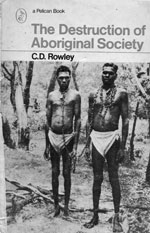
Front cover
Rowley, C.D. The Destruction of Aboriginal Society, (Penguin Australia, 1972)

Front Cover
Oakes, MJ The Aborigines of the Richmond Area; (Richmond River Historical Society Pamphlet No.2)]
LIBERAL
Thomas Lancelot LEWIS, Premier
3/2/1975-23/1/1976
1975
-
Title to Missions and Reserves in New South Wales is handed over to the Aboriginal Lands Trust
1976
-
the Department of Health sets up an Aboriginal Health Unit
3/2/1975-23/1/1976
LIBERAL
Sir Eric Archibald WILLIS, Premier
23/1/76-14/5/1976
1976 - 1988
"Anti Discrimination and Land Rights Acts fail to restore Aboriginal rights"
Chapter 11 index, links and summary follows.
LABOR:
Neville Kenneth WRAN, Premier
14/5/76 - 04/7/86
1977
Anti
Discrimination Act (1977)
Local (Rating) Amendment Act (1977)
Heritage Acts (1977)
1978
-
The Legislative Assembly of the Parliament of New South Wales sets up a Select Committee on Aborigines (Note: to find)
1979
Land and Environment Court
Act (1979)
1980
Aboriginal Land Rights Act and Amendments (1980)
Teaching Services Act (1980)
1982
-
Ministry of Aboriginal Affairs (New South Wales) is established
1983
Aboriginal Land Rights Regulation Act
(1983)
Crown Lands (Validation of Revocations) Act (1983)
NSW Land Rights Act (1983) (No. 42)
-
revokes any dedication or reservation under the Crown Lands Consolidation Act 1913 or the Western Lands Act 1901 pursuant to transfers of land to an Aboriginal Land Council
1984
NSW Land Rights Act (Amendments) Act (1984)
14/5/76 - 04/7/86
Land Claims in NSW

Reprinted by the NSW Aboriginal Land Council
May, 1981
This book is a collection of Land Claims made by Aboriginal communities in New South Wales ..."Aboriginal people in this State had to start fighting for their land ... in 1770 when Captain Cook began the white invasion. Since then whites have taken our land with guns and with laws ..."
LABOR:
Barrie John UNSWORTH, Premier
1987
-
Commonwealth Government sets up the Royal Commission into Aboriginal Deaths in Custody
Community Welfare Act (1987)
Children (Detention Centres)
Regulation (1988) (Note:
check date)
04.07.86 - 25.03.88
1988 - 1995
"Mabo overturns Terra Nullius, but Native Title Acts validate land seizures anyway"
Chapter 12 index, links and summary follows.
LIBERAL:
Nicholas Frank GREINER, Premier
25.03.88 - 24.06.92
1988
-
Bicentenary of the arrival of the First Fleet
-
Office of Aboriginal Affairs established in the Premier's Department
Hawkesbury Local Environmental Plan
(1989)
Technical and Further Education
Commission Act (1965)
1990
Aboriginal Land Rights (Revival of Financial Provision) Act 1990 (No. 32)
1991
-
Royal Commission into Aboriginal Deaths in Custody reports
Board of Adult and Community Education Act (1990)
25.03.88 - 24.06.92
"Rivers of Blood"

"Massacres of the Northern Rivers Aborigines and their resistance to the white occupation 1838 - 1870"
By Rory Medcalf (Adapted from a series published in THE NORTHERN STAR), 1989
LIBERAL:
John Fahey
1992 Mabo
-
the decision of the High Court recognises the concept of native title and overturns the doctrine of terra nullius (the notion that Australia was empty and owned by nobody until British settlement)
1993
-
Ministry of Aboriginal Affairs is re-established. It oversees the Office of Aboriginal Affairs and the NSW Aboriginal Land Council.
Commonwealth Native Title Act 1993 (No. 110)
1994
Native Title (New South Wales) Act 1994 (No. 45)
Denis Walker v the State of New South Wales
1992 - 1995
1995 - 2005
incomplete
Chapter 13 index, links and summary follows.
LABOR:
Robert John CARR, Premier
04.04.95 - 2005
1995
Aboriginal Land Rights Amendment Act 1995 (No. 39)
Children (Detention Centres) Regulation
(1995)
National Parks and Wildlife
(Land Management Regulation) (1995)
-
Office of Aboriginal Affairs is abolished and the Department of Aboriginal Affairs is established
-
National Inquiry into the Separation of Aboriginal and Torres Strait Islander Children from Their Families commences
1996
Aboriginal Land Rights Regulation (1996)
National Parks and Wildlife Amendment (Aboriginal Ownership) Act 1996 (No. 142)
-
National Parks and Wildlife Amendment (Aboriginal Ownership) Act 1996 (No. 142) comes into effect, amending the Aboriginal Land Rights Act 1983. It establishes a Register of Aboriginal Owners by the Registrar, Aboriginal Land Rights Act.
-
Wik decision of the High Court establishes that leases granted by the Crown do not extinguish Aboriginal land rights
1997
Col Markham, MP, speech, to the National Council for Aboriginal Reconciliation and the New South Wales State Reconciliation Committee.1997
-
Bringing Them Home: Report of the National Inquiry into the Separation of Aboriginal and Torres Strait Islander Children from Their Families
State Environment Planning
Policy-Rural Land sharing Communities
(1998)
Lismore Local Environment
Plan 2000 (No. 173 2000)
2001-2005 (incomplete)
04.04.95 - 2005